

Archie Weeks | 5th September 2026
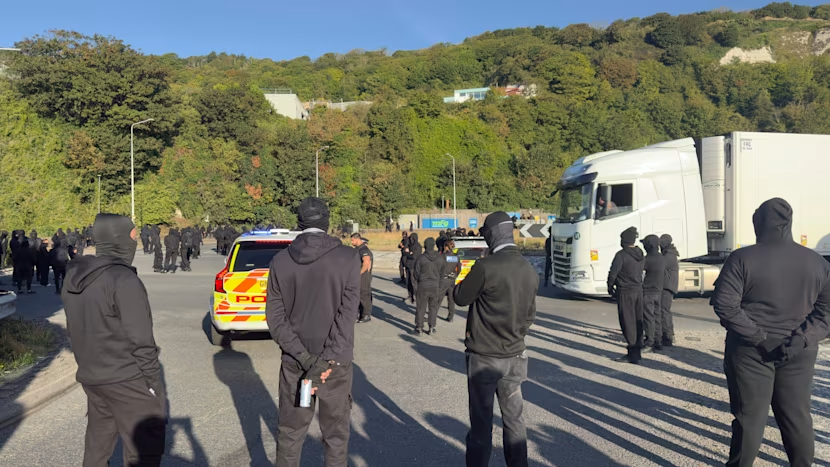
The Port of Dover was brought to a standstill on Saturday morning after hundreds of masked demonstrators blocked roads leading to one of the UK’s most important gateways to Europe, in a protest focused on Channel migrant crossings.
The demonstration, described by participants and political figures as a “Stop the Boats” protest, saw people dressed largely in black and wearing balaclavas block roads around Dover, including the A20.
The Port of Dover said all traffic entering and leaving the port had initially been stopped because of an “ongoing public order incident”. Kent Police said officers were at the scene and engaging with protesters.
National Highways reported several miles of congestion, with delays affecting motorists travelling towards the port.
Political message behind the protest
The demonstration centred on opposition to small-boat crossings of the English Channel.
Footage from the protest showed demonstrators chanting “stop the boats”, while other slogans were also heard as groups moved through Dover. The Associated Press reported that the protesters were demonstrating against immigration and that the action was connected to concerns over Channel crossings.
The protest has consequently become a political issue in its own right, with politicians from different sides responding to the disruption.
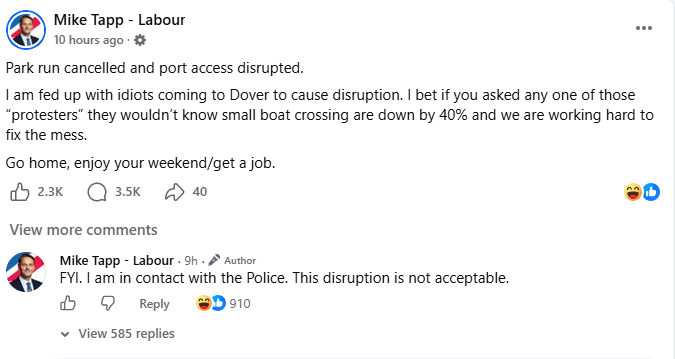
Dover and Deal MP Mike Tapp criticised the demonstration, saying he was in contact with police and objecting to protesters travelling to Dover to cause disruption. ITV reported that Tapp also pointed to a reduction in small-boat crossings compared with the previous year.
Local political figures have also responded. ITV reported comments from Dover District Council’s Conservative group leader Chris Vinson, who described the presence of masked men blocking roads as intimidating.
A Reform UK councillor in Dover also described the action as a “stop the boats” protest, while saying his party did not condone causing a public disturbance.
The Government has also condemned the disruption while reaffirming the right to peaceful protest.
A Government spokesperson said the right to peaceful protest was fundamental to democracy but said the behaviour in Dover and the resulting travel disruption was condemned.
Why Dover matters to Kent’s economy
The political dispute took place at a location of major economic importance to Kent.
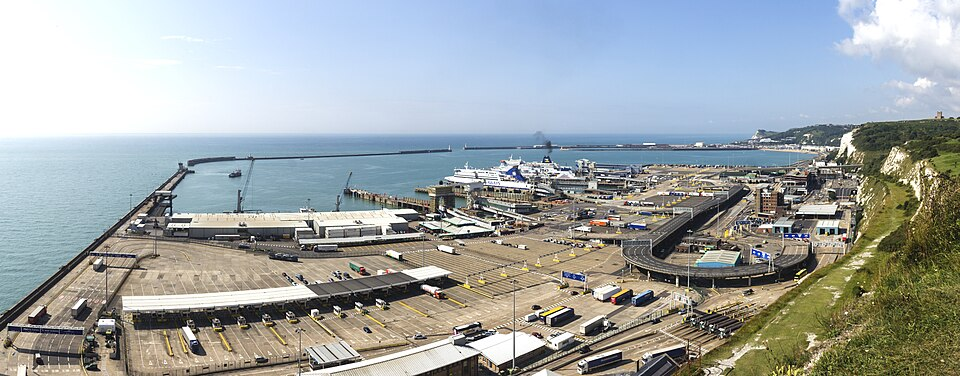
The Port of Dover is the UK’s busiest international ferry and passenger port. In 2025, it handled more than 9.1 million passengers travelling by road and more than 2.1 million freight vehicles.
The port is therefore crucial to tourism, freight and international trade.
Saturday’s blockade meant that people travelling to France faced delays reaching their ferries, while freight operators were also caught up in the congestion.
P&O Ferries said passengers who missed their booked sailing would be accommodated on the next available crossing. DFDS also said affected passengers would be accommodated on subsequent departures.
The disruption demonstrates how quickly an incident around Dover can have consequences beyond the immediate protest area.
For hauliers and businesses relying on cross-Channel transport, delays can potentially mean missed sailing slots, longer journeys and disruption to delivery schedules.
Port returns to normal
The disruption was eventually brought to an end.
The Port of Dover confirmed that its approach roads had returned to free-flowing traffic and that passengers who had experienced delays or missed sailings could use later crossings.
ITV reported that protesters subsequently left the immediate port area, with some travelling from Dover Priory station.
Kent Police remained at the scene during the demonstration. No arrests were reported in the initial coverage.
A protest about immigration, but also a disruption to Kent
Saturday’s events have placed two issues directly alongside one another: the continuing political debate over Channel migration and the economic importance of keeping Dover’s transport links operating.
The protesters used the country’s busiest ferry gateway as the location for their message about small boats.
Critics of the demonstration, meanwhile, argued that blocking access to the port simply created further problems for residents, travellers and businesses.
The incident therefore raises a wider question for Kent: how should authorities balance the right to protest with the need to protect access to critical transport and trade infrastructure?
For Dover, where the local economy is closely connected to the Channel crossing, that question is particularly significant.
The port was operating normally again by around midday, but the disruption has once again placed Dover, and Kent’s role as Britain’s gateway to Europe, at the centre of the national debate over immigration, protest and the economy.
Sources
- Associated Press — reporting on the masked anti-immigration protesters and disruption at Dover.
- ITV News Meridian — reporting on the protest, political reactions, police response and restoration of port operations.
- BBC News — initial reporting on the road blockade, congestion and ferry disruption.
- Sky News — reporting on the protest, police response and Port of Dover disruption.
- Financial Times — reporting on the disruption and restoration of normal port operations.
- Port of Dover / reported port figures — passenger and freight volumes.